
Relations with the government, the bank's majority owner, are a tricky issue for all SBI chiefs, and, like all his predecessors, Khara will be closely watched for his equations with the finance ministry representative on the SBI board.

'Spend, but create assets, spend but make sure that people benefit from it.' 'This has been a beautiful guiding principle. And I think as a finance minister I owe so much to the prime minister for keeping this path clear before us.'

Stocks such as ICICI Bank, Axis Bank, State Bank of India, Bank of Baroda and HDFC Bank are among the top banking picks of analysts for 2017. A decline in cost of funds and treasury gains are expected to help stabilise their net interest margins

Highlights of Economic Survey 2020-21, tabled in Parliament by Finance Minister Nirmala Sitharaman on Friday.

'The concern that the bad bank may create a moral hazard for the system is extremely valid.'

Transiting from "survival mode", which took most of the management time in FY21, the bank has been able to take a long-term view in terms of growth and preparing technology in the past 12 months.

'I would say restore the banks to health, get active board composed of professionals, then there will be an ideal situation for merger.'

Quant funds are a unique offering in the MF space as the investment decisions are driven by a blend of active and passive strategies.

In a soon to be published book, 'Of Counsel: The Challenges of the Modi-Jaitley Economy,' former chief economic advisor Arvind Subramanian says though RBI has a good reputation, it does not mean it's always right, as for years, the RBI was unable to grasp the seriousness of the loan repayment problems or identify the prolonged frauds of Nirav Modi and the likes.
'When we look at the quality of our retail loan book, the non-performing asset percentage is low.'
Weakness in HDFC Bank's net interest margin (NIM) might have bottomed out in the July-September quarter (Q2-FY24), analysts said on Tuesday, as most of the merger-related one-time adjustments have been done. The bank, they believe, should be able to grow from here on, allowing the stock to reverse its underperformance. "The weak NIM print was not unexpected given the merger and regulatory impact caused by the incremental cash reserve ratio (ICRR; 5-10 bps for the quarter).

While festive offers can reduce costs, borrowers should also consider the lender's transparency and service quality. Customers need to be mindful of their repayment capacity.

Banks are in need of government support to manage the stressed assets

The Reserve Bank of India on Wednesday decided to keep the policy rate unchanged for the tenth time in a row but changed its stance to 'neutral' that may lead to a cut in the forthcoming policies. RBI maintained status quo despite the US Federal Reserve lowering the benchmark rates by 50 basis points last month.
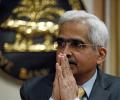
Available data obscures the true stress in bank books, and the pandemic will result in balance sheet impairments and capital shortfalls at lenders, RBI Governor Shaktikanta Das said on Monday. Balance sheet impairment and capital shortfalls will be more evident once the regulatory reliefs are rolled back, Das said in the bi-annual Financial Stability Report, asking lenders to augment capital.

The Reserve Bank of India on Tuesday underpinned the need for ensuring the quality of bank credit in the context of financial stability.

After showing a consistent rise in the previous 4 quarters, gross NPAs of 40 listed bank declined to Rs 10.03 trillion at the end of June 2018, from Rs 10.25 trillion in the previous quarter.
SBI Q3FY24 result review: A higher-than-factored weakness in the October-to-December quarter (Q3) results of State Bank of India (SBI), for financial year 2023-24 (FY24), has prompted brokerages to cut earnings estimates for the ongoing financial year. They, however, have maintained 'Buy' ratings on the stock, revising target price upwards in some cases, owing to the stock's recent underperformance relative to its peers.

The RBI has cited corporate governance and regulatory issues for not extending Kapoor's term. Further, the lender has been directed to search for a successor.

Reserve Bank Governor Shaktikanta Das will hold a meeting with CEOs of public sector banks on Wednesday to discuss issues concerning slow deposit growth and sustainability of high credit demand. As per the Reserve Bank of India (RBI) data, deposits rose by 9.6 per cent as compared to 10.2 per cent on a year-on-year basis, while credit offtake witnessed a jump of 17.9 per cent as against 6.5 per cent a year ago. According to an agenda circulated for the meeting, sources said, sustainability, including pricing and slow growth of deposits, would be discussed.

Bank credit growth declined to 8.5 per cent in January from 13.5 per cent in the year-ago period.

Breaking silence over the Rs 12,967 crore scam at Punjab National Bank, he said: "I have chosen to speak today to convey that we at the Reserve Bank of India also feel the anger, hurt and pain at the banking sector frauds and irregularities."

Conceding that there has been risk aversion among the lenders stemming from their rising asset quality concerns, the Governor said banks should lend to productive sectors, notwithstanding the importance of asset quality, by being discerning.
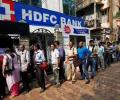
Reserve Bank of India Deputy Governor Viral V Acharya further said that the impact of the notes ban would only be temporary and would help in bringing informal sector into the mainstream economy.

Public sector banks (PSBs) have written off a massive Rs 8 trillion of loans in the seven years of the Narendra Modi government in office. This is more than twice the capital infused by the Bharatiya Janata Party-led government during the period. Between 2014-15 and 2020-21 (FY21), the Centre had infused Rs 3.37 trillion into PSBs. At Rs 1.06 trillion, FY19 saw the highest capital infusion.

Poor earnings show in the September quarter (Q2FY24), with hints of likely weakness in asset quality going ahead, forced analysts to cut earnings estimates of SBI Cards and Payment Services (SBI Card). On the bourses, shares of the State bank of India arm tumbled 7.4 per cent to Rs 732 apiece on the BSE in the intraday trade as investors factord in near-term concerns. Analysts at Motilal Oswal Financial Services, for instance, slashed SBI Card earnings by 8 per cent and 10 per cent for FY24 and FY25, respectively, as they expect the company to face pesistent magin pressure.

To minimise risk, invest in a debt fund whose duration matches your investment timeframe.

Consensus continues to be cautious with analysts pointing towards tougher days ahead

Kapoor was among the founding team of Yes Bank, along with Ashok Kapur who died in 2008.

Only investors with a higher risk appetite should enter these funds.

'If you invest in a rush at the last moment, you could compromise on selecting the best tax-saving options.'
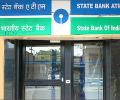
The stock was the top gainer among the blue-chips on both Sensex and Nifty.
Banks are set to sell dud-loans worth Rs 90,000 crore of 22 firms in the first tranche to the National Asset Reconstruction Company (NARCL). It's reason for cheer given that such sales to asset reconstruction companies (ARCs) have been poor in recent times. In fiscal 2020, their assets under management (AUM) contracted by 4 per cent; and in fiscal 2021, it fell by another 100 basis points to Rs 1.07 trillion. So, why are we where we are?

Listed housing finance companies (HFCs), as a group, posted a 3.7 per cent drop in second-quarter (Q2) profit year-on-year (YoY) to Rs 5,830 crore and 19 per cent sequentially on rise in interest expenses and uptick in provisions and write-offs. Operating income rose 13.7 per cent YoY to Rs 54,086 crore in Q2 of 2022-23 (FY23). Sequentially, income was up 62.3 per cent, from Rs 33,331 crore in the first quarter (Q1) of 2021-22 (FY22).

'In plain simple English, these practices amount to a looting of our country's future by some in the business community, in cahoots with some lenders,' says RBI Governor Dr Urjit R Patel.

Rajan said it is hard to offer an objective self-assessment but the RBI should probably have raised more flags about the quality of lending in the early days of banking exuberance.

In the aftermath of the PMC Bank mess which was in the RBI's highest rating of 'A' category, trustworthiness of these ratings may be up for a review.

Bank stocks have underperformed in the second quarter of FY'14 with the BSE Bankex declining 18 per cent compared to fall of 1 per cent in the BSE 30-stock index, Sensex, during this period.

Gross non-performing assets of public sector banks surged to 9.32 per cent (Rs 4.76 lakh crore) of advances in 2015-16, from 5.43 per cent (Rs 2.67 lakh crore) in 2014-15.

Total income on a standalone basis increased to Rs 1,74,972.96 crore.
